
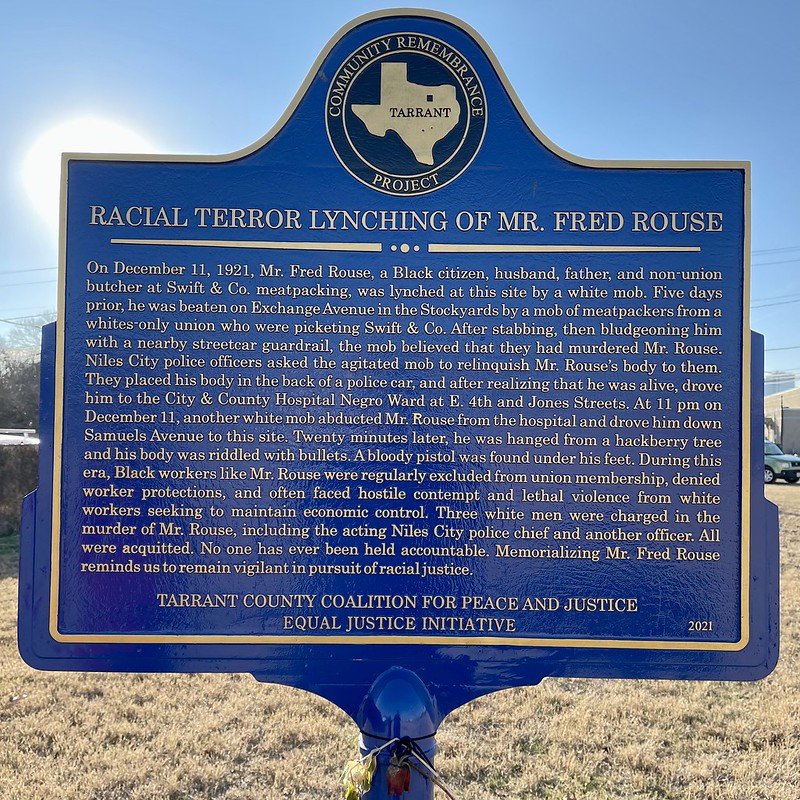
FORT WORTH, TX (Headline News USA) (Copyright © 2025) – A pair of Fort Worth nonprofits planning to convert a former Ku Klux Klan auditorium into a community space focused on arts and reconciliation have lost $110,000 in federal funding—suddenly and without a clear explanation.
The National Endowment for the Arts rescinded two grants awarded to Transform 1012 and DNAWORKS, organizations behind the Fred Rouse Center for Arts and Community Healing. The site, originally built in 1924 as KKK Auditorium No. 101, is being repurposed into a hub for education, performance, and public dialogue. It’s named for Fred Rouse, a Black Fort Worth resident who was lynched by a white mob in 1921.
The grants—one for $60,000 through the NEA’s Grants for Arts Projects and another for $50,000 under the Challenge America program—were awarded last year and had already been put into use, according to the organizations.
“We had already signed contracts and begun implementing grant-funded work,” Adam McKinney, co-founder of Transform 1012, told KERA News. The groups say they were caught off guard when they received notice in March that the funds had been terminated.
No formal public statement from the NEA has clarified the rationale for the funding pullback. Inquiries to the agency have so far only yielded a reference to internal policy changes and funding reviews.
Fort Worth’s case isn’t isolated.
Across the country, other arts nonprofits have reported receiving similar termination notices. In Dallas, the arts organization Aurora said its $20,000 NEA grant was also revoked, without a detailed reason. “It just said the NEA was no longer able to support the project,” Aurora co-founder Joshua King told the Dallas Observer. “We had already begun our programming.”
Nationwide, at least seven organizations have been affected, according to reporting by Art & Object, which first compiled a broader picture of the funding shake-up. The publication noted that the terminations appear to have started in early 2025 and have primarily targeted projects dealing with race, history, or social justice themes.
The NEA has not released a full list of rescinded grants or the criteria used in these reversals. As of now, the decisions appear final.
For Transform 1012, the funding loss is significant, but not project-ending. The group has raised more than $6 million from a variety of sources, including private donors, local foundations, and municipal support. Still, the federal recognition—especially from the NEA—carried weight beyond just the dollars.
“We don’t want to speculate about why,” McKinney said in his comments to KERA. “But the lack of transparency is concerning.”
The Fred Rouse Center, located just north of downtown Fort Worth, is still in its early development phase. Once completed, the facility is expected to host performance spaces, classrooms, and exhibits, with programming focused on healing and inclusion. The site’s legacy as a KKK meeting hall makes it one of the more symbolically potent reclamation efforts underway in the country.
Despite the setback, organizers remain committed. “This work doesn’t stop because of one funding source,” McKinney said.
Other arts leaders across Texas have expressed similar resolve. In Dallas, Aurora plans to proceed with its Light + Sound project, albeit with a tighter budget. King told the Dallas Observer that private backers are being contacted to help cover the shortfall.
What remains unclear is whether the NEA’s move signals a longer-term shift in how it evaluates grant projects tied to historical or politically sensitive subject matter. For now, affected organizations say they’re seeking clarity—if not from the agency, then from lawmakers and stakeholders who oversee federal cultural funding.
Photo credit: “Racial Terror Lynching of Mr. Fred Rouse” by 0ccam is licensed under CC BY-SA 2.0. View image on Flickr

0 Comments