
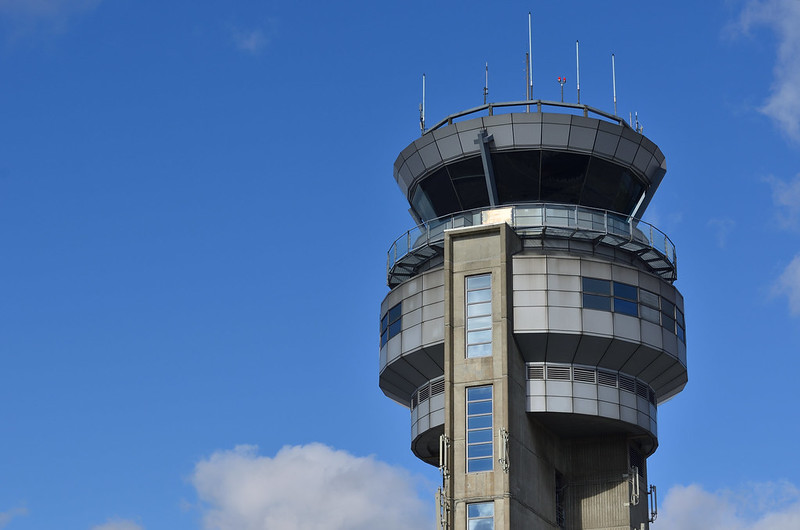
NEWARK, NJ (Headline News USA) (Copyright © 2025) – By the time the radar screens went dark early Friday morning, air traffic controllers at Philadelphia TRACON didn’t flinch. They couldn’t afford to.
It was 3:55 a.m. on May 9 when the radar scopes and radio lines feeding Newark Liberty International Airport—one of the busiest in the nation—blacked out. For 90 full seconds, controllers guiding planes in and out of North Jersey’s dense airspace were effectively flying blind. No data. No voice contact. Just silence.
“Scopes just went black again,” a controller told a FedEx pilot, frustration unmistakable in their voice. “Contact your airline and try to get some pressure for them to fix this stuff” (Reuters).
That plea wasn’t just a one-off. It was a boiling point.
This marked the second such failure in less than two weeks—both tied to the same facility, the Philadelphia Terminal Radar Approach Control center, which oversees Newark’s airspace. The first incident, on April 28, spooked controllers so badly that some took trauma leave afterward, according to internal FAA sources cited by Reuters.
These aren’t isolated glitches—they’re signs of a system buckling under its own age and neglect.
Cracks in the System
United Airlines, Newark’s largest carrier, hasn’t waited around for solutions. The airline has cut its daily flights from 440 to just under 300 and is pushing the FAA to impose formal flight caps at the airport. According to Reuters, United is lobbying federal officials to acknowledge what industry insiders have known for years: this infrastructure wasn’t built to withstand today’s volume.
And the numbers back that up. In the two-week stretch between April 24 and May 7, nearly 50% of all Newark flights were delayed or canceled.
For passengers, that translates to missed connections, sleeping on terminal floors, and hours spent watching departure boards flicker between “Delayed” and “Standby.” For pilots and controllers, it means navigating one of the most complex chunks of airspace in the country without the confidence that their systems will hold.
An Agency on Its Heels
The FAA has acknowledged the outages but has stopped short of labeling them a crisis. In a statement released Friday, the agency said it plans to meet with major airlines this week to discuss “temporary flight reductions” at Newark.
It also announced a handful of quick fixes: hiring more controllers, adding high-bandwidth telecom links, and installing a backup radar system at Philadelphia TRACON—all interim steps while they transition to a more modern fiber-optic network (Reuters).
But that long-overdue upgrade won’t happen overnight. Transportation Secretary Sean Duffy on Wednesday unveiled a multi-year, multi-billion-dollar initiative aimed at revamping the country’s aging air traffic control infrastructure. It’s an ambitious plan, one that’s expected to take at least three to four years to roll out.
“We are putting Band-Aids on broken bones,” Duffy said at a press conference in Washington. “This isn’t sustainable” (Reuters).
Pressure from Capitol Hill
In the halls of Congress, patience is wearing thin.
Senate Majority Leader Chuck Schumer didn’t mince words. “This cannot happen again,” he said Friday, calling for an immediate investigation into the connection between New York’s airspace and the Philadelphia radar hub. “We need real oversight and faster fixes. No more excuses” (Reuters).
Lawmakers from both parties are expected to push for hearings in the coming weeks, as the FAA finds itself once again playing defense—this time, under the glare of summer travel season.
A System at Its Limit
To anyone who’s worked inside the air traffic control system, the failures at Newark aren’t shocking. The tech is old. Staffing is tight. And the margin for error is razor thin.
Michael Huerta, who led the FAA under Presidents Obama and Trump, said the recent outages underscore a long-standing vulnerability.
“This isn’t just about Newark,” Huerta told CNN. “It’s about the entire National Airspace System running on outdated technology and a workforce that’s stretched to its limits.”
For the thousands of travelers flying in and out of Newark every day, there’s little comfort in knowing that the system is being patched—especially when the patches are starting to fray.
Image Credit:
Photo by Open Grid Scheduler / Grid Engine via Flickr – Public Domain (CC0 1.0)

0 Comments