
SAN FRANCISCO, CA (Headline News USA) (Copyright © 2025) – San Francisco’s overdose crisis — already among the worst in the nation — has taken a sharper, deadlier turn in 2025.
In just the first three months of the year, 192 people have died from drug overdoses, according to former Supervisor Dean Preston, who called it a 50% spike compared to the same period in 2024. In a statement published to his blog, Preston didn’t mince words: “This is what a complete failure to respond with urgency looks like.”
The former District 5 supervisor, who represented the Tenderloin before being drawn out of office during redistricting, has become a loud and unapologetic critic of Mayor Daniel Lurie — whose first 90 days in office have leaned heavily on a law-and-order approach to the city’s long-running drug emergency.
Preston’s criticism lands amid a string of policy moves that, to many in the harm reduction community, feel like a return to failed strategies. Lurie has prioritized drug-related arrests, mass sweeps of encampments, and high-profile partnerships with the California Highway Patrol and National Guard. But the bodies keep piling up.
“It’s the same tactics that haven’t worked for decades, just dressed in a new administration’s language,” said a longtime Tenderloin outreach worker who asked not to be named. “And it’s our people dying in the meantime.”
The numbers back that up. According to reporting by the Davis Vanguard, the city is “relying largely on arrests and incarceration, while programs for harm reduction, housing, and mental health remain underfunded.” The article highlights how, even with the enforcement ramped up, the overdose death rate is climbing faster than ever.
Preston pointed to a 2022 study specific to San Francisco that found aggressive policing of drug use “did not reduce arrests or incarceration and were associated with a risk of future overdose fatalities” — essentially, that this playbook not only doesn’t work, it may be actively making things worse.
“These aren’t just bad policies,” Preston wrote. “They are deadly policies.”
What makes the current moment particularly raw is how recent the hope for a new direction felt. In 2023, the city tiptoed toward a more progressive approach with the opening of an unofficial “Wellness Hub” — a supervised drug use site where hundreds of overdoses were reversed. But the program, never officially sanctioned and politically radioactive, was shut down quietly before the end of the year. No formal replacement has been proposed.
Instead, public health workers are left with Narcan and prayers.
“In the absence of leadership, we’re left patching holes in a dam that’s already burst,” said one paramedic working the Mission and Tenderloin corridors. “There’s no strategy beyond ‘arrest and repeat.’”
Mayor Lurie has not publicly responded to Preston’s latest critique, but his administration has consistently defended its enforcement-heavy strategy as necessary to “restore safety and accountability” to neighborhoods overwhelmed by open-air drug markets and violence.
That message may resonate in some corners of the city — particularly with voters exhausted by the visibility of addiction and encampments — but it’s landing hard in communities on the front lines.
As the Davis Vanguard put it bluntly: “Despite increased criminalization, overdose deaths are rising.”
And if current trends hold, 2025 could become San Francisco’s deadliest year yet.
“There is no mystery here,” Preston said in his blog post. “We know what works — and we’re doing the opposite.”
Whether voters, policymakers, and City Hall are willing to listen — or act — remains the life-or-death question.
Image Credit
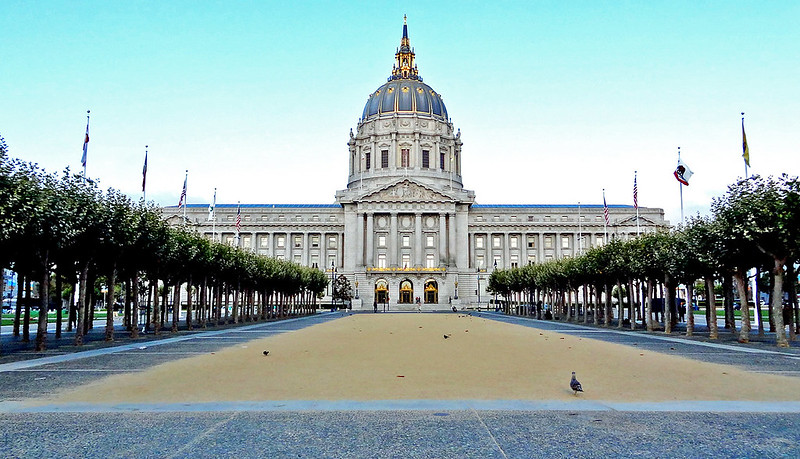
“California-06201 – San Francisco City Hall” by Dennis Jarvis is licensed under CC BY-SA 2.0.
Source: Flickr

0 Comments